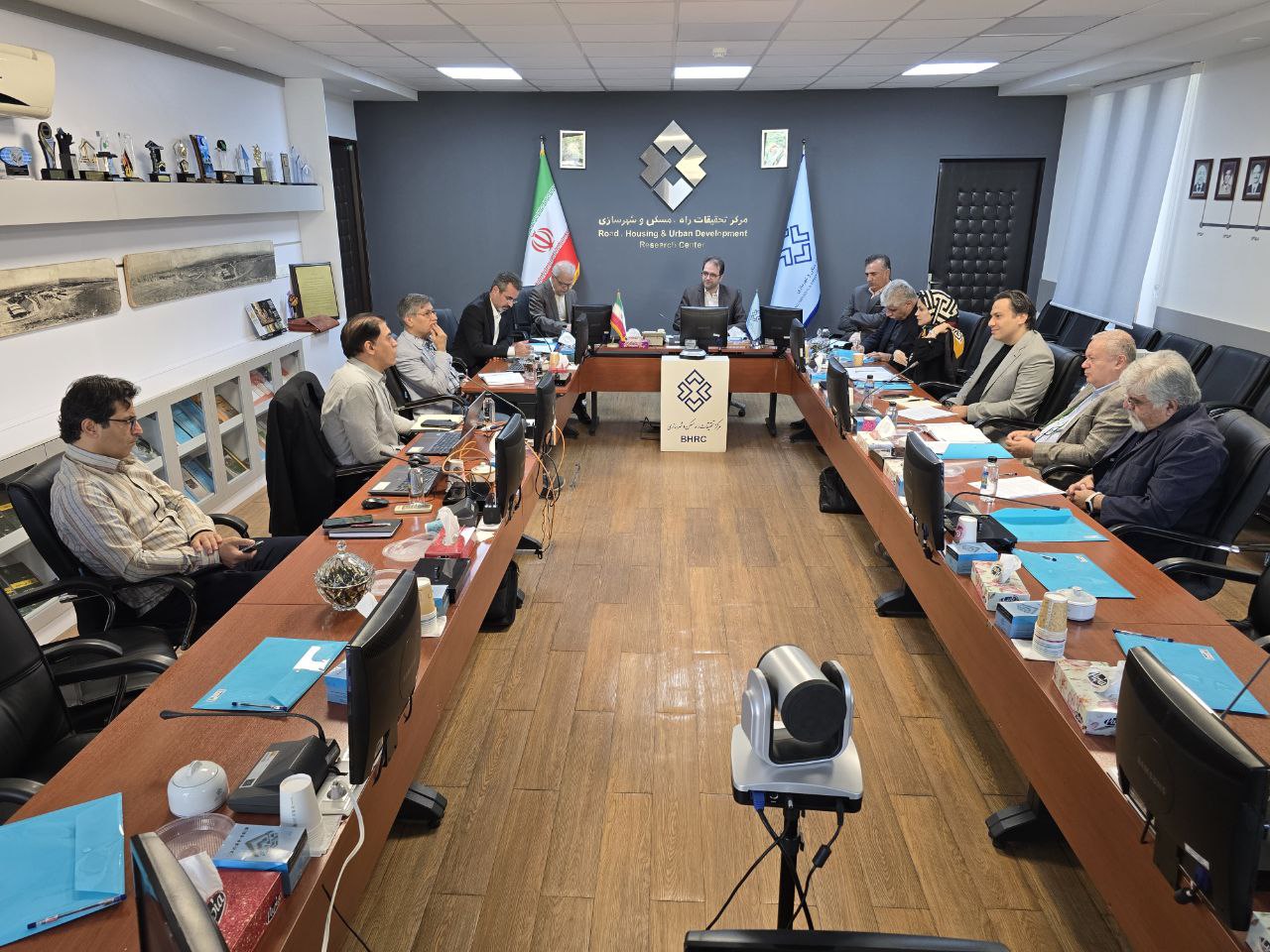
The Institute for International Studies and Cooperation in Construction Industry hosted a specialized meeting entitled “Developing the Roadmap for Artificial Intelligence in Iran’s Construction Industry” with the participation of members of the Islamic Consultative Assembly, senior government officials, university experts, and representatives from professional associations and the private sector.
At the opening of the session, Ms. Mojdeh Ebrahimi, Director of the Institute for International Studies and Cooperation in Construction Industry, delivered a comprehensive presentation on the transformative role of Artificial Intelligence (AI) in the future of the construction sector and emphasized the need to develop a national roadmap for AI in Iran’s construction industry.
Ms. Ebrahimi stated that:
“The implementation of AI can generate between 10 to 15 percent cost savings, reduce budget and schedule deviations by 10 to 20 percent, and cut engineering workloads by 10 to 30 percent, creating a significant multiplier effect on the efficiency of the construction industry.”
She highlighted that industries achieving the highest productivity from AI are those that have already developed high-quality data, standardized processes, and a culture of innovation.
“The construction industry will achieve the greatest benefits from AI when it possesses these characteristics. The key prerequisites are data digitization, human capacity development, and clear governance of data ownership and security,” she added.
Following an overview of AI applications in PropTech, UrbanTech, ConTech, and InfraTech, Ms. Ebrahimi presented an analytical review of the current state and key challenges facing AI implementation in Iran’s construction industry, including:
- Limited awareness and fragmented experiences,
- Weak policy framework and absence of national standards,
- Lack of a national AI roadmap and mandatory BIM standards,
- Traditional and innovation-resistant structures within the industry,
- Shortage of multidisciplinary professionals (engineering + AI),
- Lack of a national project data platform,
- Insufficient investment and financial support mechanisms.
During the session, the Institute introduced its newly developed “Framework for Assessing the Current Status of Artificial Intelligence in Iran’s Construction Industry,” designed to evaluate readiness, identify gaps, and guide evidence-based policymaking.
Additionally, the Institute announced the completion of the Persian translation of the book “Artificial Intelligence and Cities: Risks, Applications, and Governance” (originally published by the Milan Institute), produced in collaboration with the Building and Housing Research Center (BHRC), to serve as a national reference for AI policy and governance in the built environment.
A number of distinguished participants shared their expert perspectives:
- Masoudi, Head of the AI Committee of the Parliamentary Faction for Trade Facilitation and Investment, emphasized the need for inter-agency and cross-sectoral collaboration to ensure effective AI implementation, identifying energy management and construction safety as top priorities.
- Mehran Rafiee, Secretary of the ICT Construction Management Secretariat at the BHRC, underlined the importance of establishing a national construction data platform, launching pilot projects, applying AI to the revision of national building regulations, facilitating permit issuance processes, and enhancing human capacity development as foundational enablers for AI adoption.
- Gheraati, Member of the Board of the Coordination Council of Engineering and Professional Associations of Iran, called attention to ethical and operational risks in AI implementation, emphasizing the urgency of developing technical and ethical standards and governance frameworks.
- Yazdani, Member of the Executive Board of the Civil Engineering Commission of the Tehran Construction Engineering Organization, discussed the map control process within the organization and noted the potential for AI to reduce the time and workload required for engineering review. He also highlighted opportunities in intelligent structural design, construction site safety management, and the analysis of big data for urban growth forecasting.
- Shadfar, Member of the Architecture Professional Group of the Tehran Construction Engineering Organization, stressed the importance of building technical identity data and the potential of AI for analyzing and leveraging big property datasets, proposing the integration of building management systems with the National Regulation Chapter 22 Platform.
- Pirzeyad, Board Member of the Tehran Association of Mass Builders, pointed to project financing, digital sales platforms, and cost reduction through AI-based optimization as priorities for developers and investors.
At the conclusion of the meeting, participants welcomed the Institute’s initiative in creating a structured assessment framework and agreed on forming a Joint National Working Group consisting of representatives from government, parliament, the private sector, and research institutions to jointly draft the National AI Roadmap for Iran’s Construction Industry.
📌 Public Relations Department – Institute for International Studies and Cooperation in Construction Industry
This meeting marks a pivotal step toward the integration of science, policy, and industry for advancing intelligent, efficient, and sustainable construction practices in Iran.